
Jun 20, 2013
  • Twitter
  • Facebook
  • YouTube
  • RSS


LargeUp Interview: Exclusive Q+A with Salaam Remi


Words by Jesse Serwer, Photos by Daison Osbourne—

salaam-remi

“Most people didn’t even know I exist, and I don’t want them to,” Salaam Remi says. “‘Know my name if you gotta write it on a check’ has been my motto for a long time.” Readers of album credits know the low-key Remi as the guy who put the Fugees, Amy Winehouse, Jasmine Sullivan and Miguel on the map with career-launching hits, and as Nas’ most reliable collaborator for the last decade. The son of Trini-Bajan music producer and veteran promotions man Van Gibbs, Salaam is also behind the most artistically successful hybrids of hip-hop and reggae, from his 1992 remix of Super Cat’s “Ghetto Red Hot” to his recent work with Spragga Benz, and his sublime flip of vintage Super Cat track “Dance Inna New York” on Nas’ “The Don.” His catalog is stacked with remixes so definitive that the originals are no longer even a thought (see Ini Kamoze’s “Here Comes the Hotstepper,” a U.S. No. 1 single after Salaam got his hands on it).

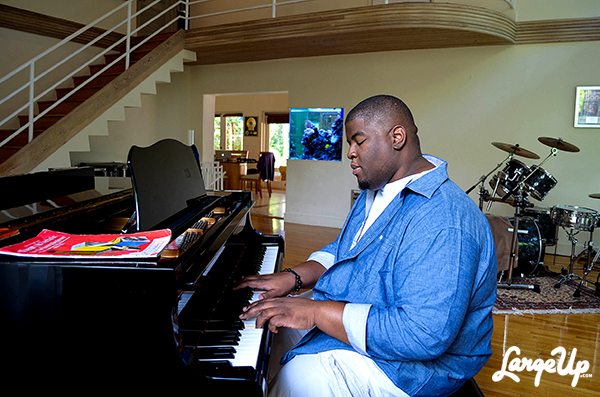
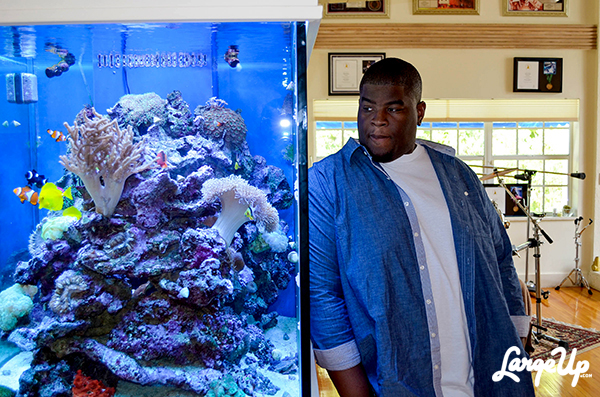
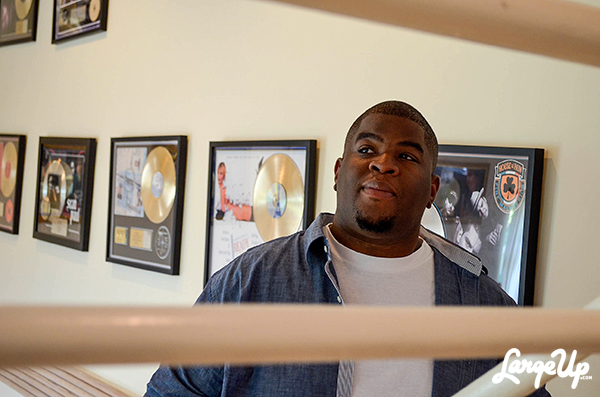
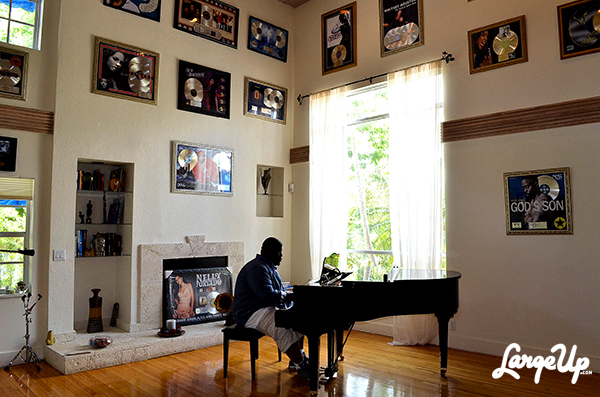
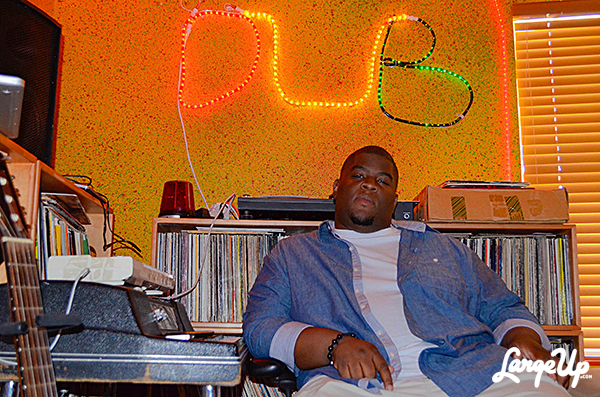
Raised in New York City, Salaam has, since 2001, been based in Miami. He recently invited LargeUp to the private studio he calls Instrument Zoo for a rare look at the creative den where he laid the foundation for Back to Black with Amy Winehouse, and crafted the tracks that make up the heart of Nas’ Life is Good. Head over to Okayplayer for part two of our interview with Salaam, and check our latest Toppa Top 10 for the stories behind 10 of Salaam’s most classic records, from “Ghetto Red Hot” to “The Don.”

LargeUp: For someone who has produced as many major records as you have, you have been fairly anonymous. Or at least until recently. I know you’ve had to be something of a spokesman for Amy Winehouse since she died. But do you deliberately try to keep yourself in the background?

Salaam Remi: It’s my personality number one. I felt that when a record comes on and says, “hey, this is gonna make you dance,” then now you’re just cheating the record by saying it, rather than making emotion there. So my legacy and catalog of records from the beginning is things that people felt on the other side of the planet, who might not even speak the language the record was made in, but the emotion carried. Rather than me ever having to say, ‘Oh this is a make-you-dance,’ or, ‘This is a make-you-sad,’ or whatever type of song. Or even knowing who made it. Because I wasn’t selling me, I was selling the artist. The artists that I’ve worked with are recognized as artists, not as producer-driven robots.

salaam-remi-daison-osborne
Salaam recreating the Sleng Teng riddim on the Casio MT-40

I’ve moved past beat status probably around the Fugees. I made the “Fu-Gee-La” beat for Fat Joe, he didn’t use it, but what it became for the Fugees was helping them with artistry, and they became artists. The Fugees were all separate artists who then produced other artists. I’m doing a lot of film work now. When you’re [scoring] a movie you don’t wanna be like “oooh that song is on” and pay attention to the artist instead of the person’s story. The music is just a bed to enhance that and luckily when people look at my career they see I’ve worked with artists who are really recognized as artists, like a Lauryn [Hill], like a Amy [Winehouse], a Jasmine Sullivan, a Nas. Sometimes they know who did the production but the average human just wants the experience.

My dad was involved with loads of records that people had no idea he was involved in, so I came up understanding that it wasn’t about being up front in order to be successful. My success isn’t based on that. It’s based on what’s lasted this amount of time. I’ve lasted this long by doing what’s right to me. Except playing around in some some Spragga video, I’ve never actually been in a video. I went to the Fugees “Nappy Heads” video but got cut out. That’s just not my steez. I don’t even go to the clubs. But I know how to move a club, because I spent so many years on the DJ level. A good DJ understands what moves the club, and what emotions move people.

LU: Can you produce albums top to bottom often, or do you have to set aside years to do that right?

SR: It depends on the chemistry and if the stars align where there’s a project that really is there. At this point I’m 40 years old, I’ve been doing this since I was 17 professionally, and had records out since I was 14. Coming from the background I come from, I understand how to crack whatever the code is. There’s a lot of things I contributed to greatly with one session. Miguel came here for two days, recorded “All I Want is You,” and a song that’s probably gonna be the single off his new album, in one session. What “All I Want is You” meant to Miguel, it wasn’t the number one record, but it was the record that got the car started. I get with the artist, we figure out something then, boom here’s your song. I understand how to do that in one go. Those things mean as much as doing different records for different artists. I don’t have anything I’m going all the way in on now outside of my own projects that I’ll be rolling out by next year.

LU: What are those projects?

SR: Mostly instrumental stuff, then a few artists that are incubating right now. I’m working on my new infrastructure of how to drop projects ’cause there needs to be a whole ‘nother motion on how to do it. I see a generation of people that are getting bored, listening to the same stuff over and over. My goal is to maintain what I’ve been doing up til now— when you see my name and you know it’s something of quality, it might be any genre or any type of artist, but it’s gonna stick in your head and make you go wow, that was different. However that materializes, its not really about a particular artist or project, or genre. Whatever inspires me, I’ll start vibing out, and it will become what it needs to become.

LU: What is more rewarding, taking a veteran artist that’s got a lot of expectations riding on them, like a Nas, or taking a new artist that’s raw and making them into a career artist?

SR: I can’t say which one is more rewarding, but what has happened most often is I’ll work with artists from zero, negative zero, and help them become a brand artist. Nas is probably the only artist I work with that had a legacy already before we started working together. With the Fugees, I was really the pilot light that set it off and then their own artistry and talent was able to take it further. A big part of my goal is not to produce every record, my goal is to have it where they can produce themselves, and become producers for other artists. CJ Hilton will be a producer like Lauryn and Wyclef. They will be writers and producers of many artists to come throughout their career, so that’s important to me.

LU: Let me take you back a little bit. Tell me about your father, and who he is.

SR: My father is Van Gibbs. He was a musician in the Queens College scene, then he came up through the disco era, did Broadway, the Jazzmobile, then he worked on Tanya Gardner’s Work that Body album and a lot of pre-rap, NY scene disco records. He also arranged what became “Heartbeat.” That came 360 for me when I used it for [Ini Kamoze's] “Here Comes the Hotstepper.” He was a New York promoter in the early 80′s— he was the first person to take Doug E. Fresh in the studio. He was cool with Sly and Robbie, so he pulled them together for a couple of records he was working on. He put the contest with radio together where they discovered the Fat Boys, and wound up producing the Fat Boys, Kurtis Blow. Up to now, he’s still a manager, managing Alison Hinds. He started managing Chuck Chillout, and Funkmaster Flex was a part of that crew. He used to help Flex out when Flex was just getting into radio. Then he used to produce the reggae show at WBLS with Pat McKay and Bobby Konders.

LU: So that’s where you linked with Bobby?

SR: I’d see Bobby in—rest in peace—Hal Jackson‘s records all the time looking for breaks. Bobby knew where everything was in the library, and he was also doing remixes. He had a day job at WBLS, and he was on the air. When people came into the station to give us records, most likely you gave it to Bobby because Bobby knew where all the music was. We were all at WBLS doing different stuff and through my dad I had known Marley Marl.

During the summers I spent with my dad as a kid, I saw hip-hop moving firsthand. My dad came into school with a Beat Street jacket on, driving the Knight Rider car and my friend was like, “Oh, he’s a muscle man, look.” Being he was a musician and my uncles were musicians, I understood that was a profession and what could happen. I could literally play a basic disco beat on drums, around ’75. Once I got out of high school running around at night with Flex or Bobby, I’m in the clubs seeing what’s happening first hand, from 89 forward. Bobby would call and say come to the studio and do a remix with me, I’ll throw you a G, and as a college kid at 18 I’m like “What!?!” I would take whatever [breakbeats] were just used in hip hop or I couldn’t have as exclusive breaks—’cause in hip hop nobody wants to use the same breaks somebody else has used—and put them into the reggae [remixes] with Bobby.

LU: That’s how that whole remix style started?

SR: That’s how it started being authentic ’cause people did hip-hop reggae before but I was able to make it the authentic hip-hop track you would have gotten for what whatever was happening then. I was taking that little hip-hop track and putting it on this other music. [Grand] Puba used James Brown for “Who Can Get Busy,” then I literally took it and put it on [Supercat's] “Don Dada” remix and threw [Kool and the Gang's] “Chocolate Buttermilk” underneath it. “Ghetto Red Hot” that was based on [De La Soul's] “Bitties in the BK Lounge.” Brand Nubian’s “Punks Jump Up to Get Beat Down” wasn’t even out yet. It was like I’m gonna use this for hip-hop now. [I had my] stack of move it to reggae records. I was literally using everything going on in hip-hop and making it strong for that. I was also in the DJ booth with Bobby. Bobby at that time was one of the DJs I really looked up to. Bobby was great at that time at back spinning the house music into the reggae music into the R&B music, into the Hip Hop, or whatever was going on.

LU: I don’t really remember too many hip-hop remixes of reggae before that…

SR: You started getting that Kenny Dope stuff which was more loops off of the current hip-hop records put under reggae, and then the real official yard vocals on top of that. The biggest thing with me with remixes was I made sure everything was in key so it felt like the original record. Usually my remixes took over whatever the original was. Ini Kamoze’s “Here Comes the Hotstepper” was not done to “Heartbeat,” I put that on there. After that phase, I got bored and left it alone but I was still doing hip-hop, and other types of records. I decided to come back to reggae after being in the clubs again. I’d be in the booth with Flex, playlisting with him almost like the selector and the soundman. I had gotten bored with doing reggae the way we were doing it, cause you started getting records that weren’t really that good, and once you get those I back off. Then I was like I’m gonna start doing [reggae with] the [R&B] classics, cause we were doing the classics section in the club. That’s where [Mega Banton's] “Soundboy Killing’ came from, with the Barry White. When Jack Scorpio came up and we were working on the Mega [Banton] album, I flipped the remix, and made that work, and then Ini had “Heartbeat,” Super Cat on “South Central” remix had [The Gap Band's] “Outstanding.” I did “Rising to the Top” that Shabba put out, then Shabba came back with [a sample of Dennis Edwards'] “Don’t Look  any Further” on the “Let’s Get It On” remix.

I was intentionally making songs there for a playlist for, now if you’re playing your classics you can go into your [hip-hop sample] reggae, then go into your other reggae, then back out, rather then playing your classics and now you gotta get into hip-hop and move it around. It was before it was even a trend in hip hop. Before Mary’s ‘My Life.’ When I was doing Super Cat’s ["South Central"] Puffy came in the studio like “heyyy yo, what are you doing?” Ini Kamoze’s “Here Comes the Hot Stepper” was the first No. 1 pop record with that 80’s thing. After that, everybody was would just take another 80’s record and throw it underneath there, but I get bored, and I didn’t really feel that in hip-hop. My hip-hop energy is like what you hear me do now. I wanted stuff that was gonna make you drive faster or make you wanna jump somebody. That energy of hip hop. And that’s what [Nas'] ‘A Queens Story’ is. I want you to speed when you hear that, you know doing doughnuts in a car with skirts on it.

salaam-remi-daison-osbourne


6 Comments

  1. avatar Tami

    I’ve followed his music for a while. He’s an awesome musician..
    I’m a Big Fan!!!

  2. avatar Neil Nice

    Been a big fan of Salaam ever since i first heard that “Ghetto Red Hot” remix in 92′ and then Bush Babees “Remember We” remix, Major Stress “More and More,” The Fugees…nevermind his work with Amy Winehouse and Nas over the years…i could on and on but i’ll just say big up a truly wicked interview for a truly wicked and well versatile producer each and everytime. Nuff respect!!!

  3. Pingback: The Score: Salaam Remi Talks Amy Winehouse & NaS In Exclusive Q&A | GarnetReid.com

  4. avatar DRASAR MONUMENTAL

    THANKS FOR THIS INTERVIEW…..DUDE HAS BEEN AROUND FOR QUITE SOMETIME ON THE LOW…

    I’M DYING TO ASK, WHATEVER HAPPENED TO MAJOR STRESS? “SNAKES TO BURN” & “TELL YOUR CREW” ARE CERTIFIED CLASSICS IN MY OPINION….

    ONE-
    D

  5. Pingback: The Week In Music: What To Read Now, Labor Day Edition | Justin Bieber's

  6. Pingback: Sunday Reads — Danski's Logic Pro Blog

Post a Comment

Your email is never published nor shared. Required fields are marked *

*
*

-->